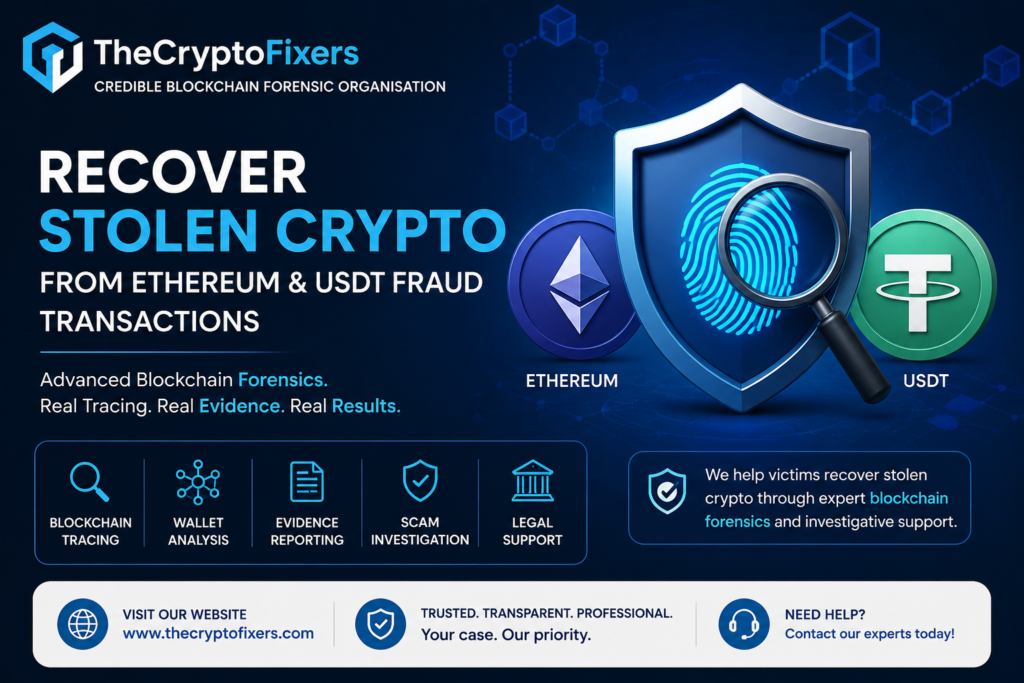
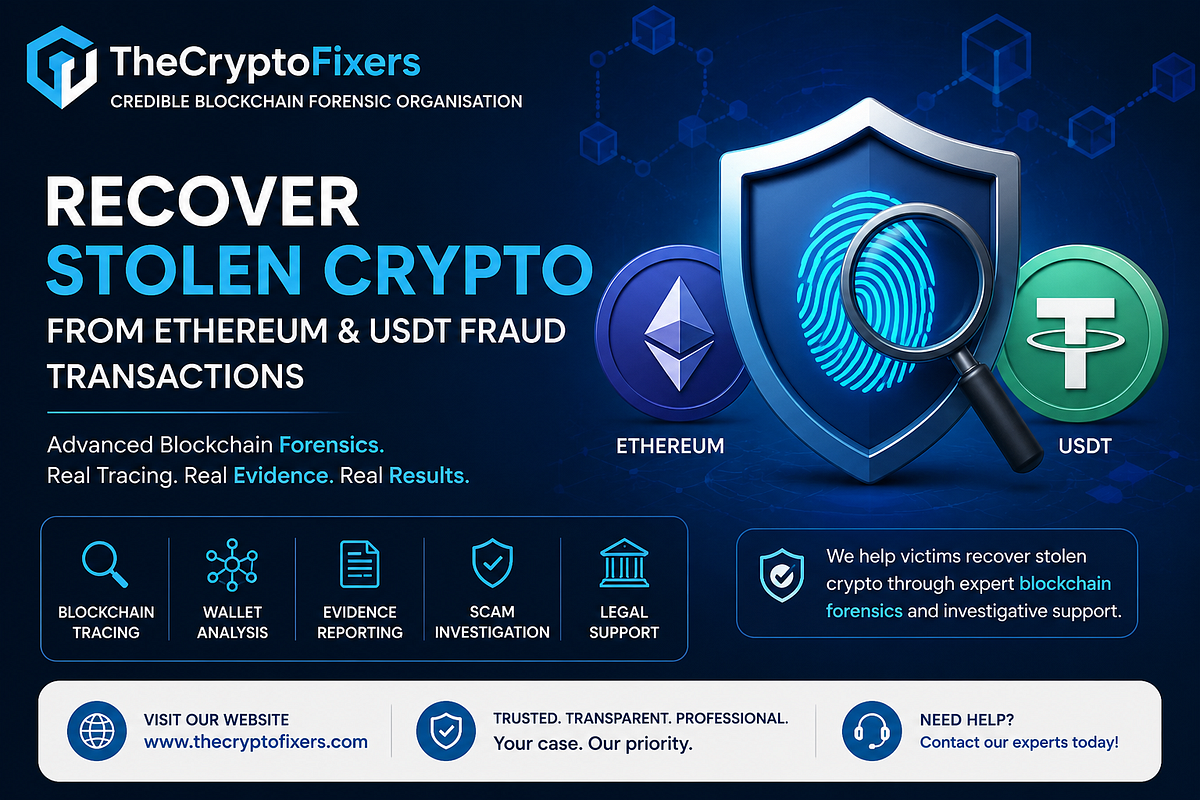
Recover stolen crypto from Ethereum and USDT fraud transactions with TheCryptoFixers, a credible blockchain forensic organisation specializing in blockchain tracing, wallet analysis, scam investigations, and digital asset recovery support.
The rise of Ethereum and USDT transactions has transformed the digital financial world, creating faster and more accessible ways to transfer value globally. Unfortunately, this same convenience has also created opportunities for cybercriminals, investment scammers, phishing syndicates, fake exchanges, impersonators, wallet drainers, and organized crypto fraud networks to exploit unsuspecting victims.
Every day, individuals and businesses search online for ways to recover stolen crypto after losing Ethereum, USDT, or other digital assets to fraudulent schemes. Many victims are left feeling helpless after watching their funds disappear into anonymous wallets, decentralized exchanges, mixers, or offshore platforms. The emotional and financial impact can be devastating, especially when traditional banking protections are unavailable in decentralized finance environments.
However, recovering digital assets is not always impossible. Modern blockchain intelligence tools, forensic tracing techniques, wallet analytics, and transaction investigations have significantly improved the ability to track suspicious movements of cryptocurrency across multiple blockchain networks.
At TheCryptoFixers, the mission is to provide victims with professional blockchain forensic support designed to help investigate suspicious Ethereum and USDT fraud transactions. As a credible blockchain forensic organisation, TheCryptoFixers focuses on blockchain analysis, evidence collection, transaction mapping, and investigative reporting that may support recovery efforts and legal escalation pathways.
If you are searching for reliable information on how to recover stolen crypto, this comprehensive guide explains:
- How Ethereum and USDT scams operate
- Why scammers prefer these digital assets
- How blockchain forensic investigations work
- Steps victims should take immediately
- Common mistakes that reduce recovery chances
- How credible forensic organisations investigate fraud
- Why fast action matters in crypto investigations
Why Ethereum and USDT Are Common Targets for Crypto Fraud
Ethereum and USDT are among the most heavily used cryptocurrencies in the digital economy. Because of their popularity, scammers frequently exploit them in fraudulent schemes.
Ethereum powers:
- Decentralized finance platforms
- NFT marketplaces
- Smart contracts
- Web3 applications
- Token ecosystems
USDT, meanwhile, is widely used because it is a stablecoin tied to the U.S. dollar. Fraudsters prefer USDT because:
- Transactions are fast
- Transfers can occur globally
- Victims perceive stablecoins as safer
- Large amounts can move quickly
- Cross-chain transfers complicate investigations
As a result, many victims search online to recover stolen crypto after losing Ethereum or USDT through:
- Fake investment platforms
- Romance scams
- Telegram scams
- WhatsApp trading groups
- Phishing websites
- Wallet compromise attacks
- Fake customer support impersonation
- DeFi rug pulls
- NFT fraud
- Malware attacks
TheCryptoFixers investigates these transaction patterns using blockchain forensic methodologies designed to trace digital asset movements across networks and identify potential exchange exposure points.
Understanding How Ethereum and USDT Fraud Transactions Happen
Fake Investment Platforms
One of the most common reasons victims attempt to recover stolen crypto involves fraudulent investment websites promising unrealistic profits.
Victims are often approached through:
- Social media
- Dating apps
- Telegram groups
- WhatsApp investment communities
- LinkedIn messages
- Fake celebrity endorsements
Initially, small withdrawals may succeed to build trust. Eventually, larger deposits are encouraged until withdrawals suddenly become impossible.
Common excuses include:
- “Tax payments”
- “Verification fees”
- “Liquidity unlock charges”
- “Wallet synchronization”
- “Anti-money laundering deposits”
At this stage, victims realize they may need professional help to recover stolen crypto from fraudulent Ethereum and USDT transactions.
Wallet Draining Scams
Wallet drainers have become increasingly sophisticated.
Scammers trick users into:
- Connecting wallets to malicious dApps
- Signing dangerous smart contracts
- Approving unlimited token permissions
- Downloading fake wallet software
Once access is granted, scammers rapidly transfer Ethereum or USDT to multiple intermediary wallets.
Blockchain forensic investigations help identify:
- Transaction flows
- Smart contract interactions
- Associated wallets
- Exchange endpoints
- Cross-chain movements
TheCryptoFixers uses blockchain intelligence techniques to map suspicious wallet activity and identify patterns commonly associated with organized fraud groups.
Phishing Attacks
Phishing remains one of the biggest causes of crypto theft.
Victims searching to recover stolen crypto often interacted with:
- Fake MetaMask websites
- Counterfeit exchange login pages
- Fake wallet update portals
- Fraudulent customer support links
Once credentials or seed phrases are stolen, attackers gain immediate access to digital assets.
Because blockchain transactions are irreversible, time becomes critical.
Why Immediate Action Is Critical to Recover Stolen Crypto
The first 24 to 72 hours after a crypto theft are often the most important.
Fraudsters typically attempt to:
- Split stolen funds
- Move assets across chains
- Use decentralized exchanges
- Send funds through mixers
- Convert assets into privacy tokens
- Deposit assets into offshore exchanges
The faster forensic analysis begins, the greater the likelihood of identifying actionable leads.
TheCryptoFixers encourages victims to preserve:
- Wallet addresses
- Transaction hashes
- Screenshots
- Emails
- Chat conversations
- Exchange records
- Smart contract details
These digital traces can become essential components of blockchain forensic investigations.
How Blockchain Forensics Helps Recover Stolen Crypto
Blockchain technology creates permanent transaction records.
While wallet owners may appear anonymous, blockchain forensic analysis can identify:
- Transaction patterns
- Behavioral indicators
- Exchange interactions
- Linked wallet clusters
- Timing correlations
- Smart contract relationships
This is where credible blockchain forensic organisations play an important role.
Transaction Mapping
Transaction mapping involves tracing stolen Ethereum or USDT across multiple wallet addresses.
Investigators analyze:
- Incoming transfers
- Outgoing transfers
- Token swaps
- Cross-chain bridges
- Exchange deposits
The goal is to identify potential recovery pathways or investigative leads.
Wallet Clustering
Many fraud operations use numerous wallets simultaneously.
Blockchain forensic tools can identify:
- Related wallets
- Reused infrastructure
- Shared transaction behaviors
- Common exchange interactions
This helps investigators build broader fraud intelligence profiles.
Exchange Exposure Analysis
One major objective in efforts to recover stolen crypto is identifying when stolen assets enter centralized exchanges.
Why does this matter?
Because some exchanges maintain:
- KYC records
- Login histories
- Withdrawal logs
- Device fingerprints
A credible blockchain forensic organisation may compile evidence suitable for escalation to exchanges or legal authorities when appropriate.
TheCryptoFixers focuses on compiling investigative reports designed to support these processes.
Common Ethereum and USDT Scam Scenarios
Romance Investment Scams
Victims are emotionally manipulated into fake investments.
Fraudsters build trust over weeks or months before encouraging Ethereum or USDT transfers.
These scams frequently involve:
- Fake trading dashboards
- Artificial profits
- Emotional pressure
- Urgency tactics
Victims later search desperately to recover stolen crypto after withdrawals fail.
DeFi Liquidity Scams
Scammers promote fake DeFi projects offering unrealistic staking rewards.
Once funds are deposited:
- Liquidity disappears
- Developers vanish
- Smart contracts are abandoned
Blockchain forensic investigations may still identify transaction destinations and wallet relationships.
OTC Trading Fraud
Fake over-the-counter trading brokers lure victims into direct USDT transfers.
After payment:
- The seller disappears
- Fake support representatives emerge
- Additional fees are demanded
This is another growing reason people seek services to recover stolen crypto.
Mistakes Victims Make After Losing Ethereum or USDT
Paying Fake Recovery Scammers
Many victims unfortunately become targets twice.
Fraudsters monitor:
- Reddit posts
- Telegram groups
- Complaint forums
- Social media discussions
They promise guaranteed recovery in exchange for upfront fees.
Warning signs include:
- “Guaranteed recovery”
- “Instant blockchain reversal”
- “Special hacker access”
- “Recovery in 24 hours”
A credible blockchain forensic organisation focuses on investigation, tracing, evidence gathering, and realistic recovery support — not unrealistic guarantees.
Delaying Investigation
Waiting weeks or months significantly reduces investigative opportunities.
Stolen assets may:
- Pass through mixers
- Reach uncooperative jurisdictions
- Convert into privacy coins
Fast reporting improves investigative possibilities.
Deleting Evidence
Victims sometimes delete:
- Chats
- Wallet screenshots
- Emails
- Transaction records
Preserving evidence is essential for blockchain forensic analysis.
How TheCryptoFixers Approaches Blockchain Investigations
TheCryptoFixers positions itself as a credible blockchain forensic organisation focused on professional crypto fraud investigations.
The investigative approach may include:
- Wallet tracing
- Transaction mapping
- Blockchain analytics
- Scam pattern analysis
- Exchange exposure identification
- Evidence compilation
- Smart contract review
- Risk scoring
The goal is to help victims understand:
- Where funds moved
- Which wallets interacted
- Potential exchange touchpoints
- Investigative options available
The Role of Blockchain Analytics in Recovering Stolen Crypto
Advanced blockchain analytics tools can identify:
- High-risk wallets
- Scam-associated addresses
- Mixing services
- Exchange clusters
- Cross-chain behaviors
These tools improve the efficiency of crypto investigations involving Ethereum and USDT theft.
Because blockchain records are permanent, transaction histories often remain traceable even after multiple transfers.
This is why many victims continue searching for professional support to recover stolen crypto after believing their funds disappeared permanently.
Can Stolen Ethereum or USDT Actually Be Traced?
Yes, in many situations blockchain transactions remain traceable.
However, traceability does not automatically guarantee recovery.
Success depends on factors including:
- Speed of reporting
- Cooperation from exchanges
- Jurisdictional issues
- Quality of evidence
- Complexity of laundering methods
- Whether assets reached identifiable platforms
A credible blockchain forensic organisation provides realistic guidance rather than false promises.
Important Steps to Take Immediately After Crypto Theft
1. Stop Sending Additional Funds
Scammers often demand:
- Verification fees
- Recovery charges
- Tax payments
Do not continue sending cryptocurrency.
2. Secure Remaining Wallets
Move remaining assets to secure wallets.
Change:
- Passwords
- Exchange credentials
- Email access
- Two-factor authentication
3. Preserve All Evidence
Save:
- Transaction hashes
- Wallet addresses
- Screenshots
- Communication records
4. Document the Timeline
Create a detailed sequence of events including:
- Dates
- Wallet transfers
- Website interactions
- Scam communications
5. Seek Professional Blockchain Investigation Support
Victims searching to recover stolen crypto should prioritize credible blockchain forensic organisations that focus on evidence-based investigations.
Why Credibility Matters in Blockchain Forensics
The crypto recovery industry unfortunately contains many misleading operators.
A credible blockchain forensic organisation should emphasize:
- Transparency
- Realistic expectations
- Evidence-based analysis
- Professional reporting
- Legal compliance
- Investigative methodology
TheCryptoFixers focuses on blockchain forensic investigation support rather than exaggerated recovery guarantees.
This distinction matters greatly for victims already dealing with financial losses.
How Blockchain Intelligence Continues Evolving
Crypto investigations are becoming increasingly sophisticated.
Modern blockchain forensic capabilities now include:
- AI-assisted transaction analysis
- Cross-chain tracking
- Wallet risk intelligence
- Exchange attribution analysis
- Smart contract monitoring
- Fraud pattern recognition
As criminal methods evolve, forensic methodologies must evolve as well.
This ongoing innovation strengthens efforts to recover stolen crypto involving Ethereum and USDT fraud.
Recover Stolen Crypto from USDT Fraud Transactions
USDT fraud investigations often involve:
- TRON network transfers
- Ethereum ERC-20 transfers
- Cross-chain swaps
- Centralized exchange deposits
Stablecoins are heavily used in scams because they reduce volatility risk for criminals.
Blockchain forensic investigations can trace:
- Stablecoin flows
- Wallet interactions
- Exchange movement patterns
TheCryptoFixers analyzes these transaction pathways to support investigative reporting and tracing efforts.
Recover Stolen Crypto from Ethereum Fraud Transactions
Ethereum investigations may involve:
- Smart contract exploits
- NFT scams
- Wallet drainers
- Token approval abuse
- Decentralized exchange activity
Ethereum’s transparent blockchain structure often provides valuable investigative data for forensic analysis.
Transaction histories can reveal:
- Wallet behavior
- Contract interaction patterns
- Token movements
- Exchange touchpoints
This data becomes essential when attempting to recover stolen crypto.
FAQ Section
Can stolen Ethereum be recovered?
In some cases, blockchain forensic investigations can trace stolen Ethereum transactions and identify exchange exposure points or investigative leads. Recovery outcomes depend on several factors including timing, evidence quality, and exchange cooperation.
Can USDT transactions be traced?
Yes. USDT transactions on networks such as Ethereum and TRON are typically traceable using blockchain forensic analytics tools.
How long does a blockchain investigation take?
The timeline varies depending on transaction complexity, wallet movement patterns, cross-chain activity, and the amount of evidence available.
What does a blockchain forensic organisation do?
A blockchain forensic organisation investigates suspicious crypto transactions using blockchain intelligence tools, transaction mapping, wallet analysis, and evidence collection methodologies.
Is it possible to recover stolen crypto after a scam?
Some cases may present investigative opportunities, especially when action is taken quickly and detailed evidence is preserved.
Why Educational Awareness Helps Prevent Future Losses
The best defense against crypto fraud includes:
- Security awareness
- Wallet safety education
- Scam detection training
- Verifying platforms carefully
- Avoiding unrealistic profit promises
Victims seeking to recover stolen crypto often discover warning signs only after funds are lost.
Education remains one of the strongest preventative tools available.
Final Conclusion
The growth of Ethereum and USDT adoption has created enormous opportunities within the digital economy, but it has also increased the scale and sophistication of cryptocurrency fraud worldwide. Every day, victims search online for ways to recover stolen crypto after losing funds through phishing attacks, fake investment platforms, wallet compromises, romance scams, and fraudulent trading schemes.
Although blockchain transactions are irreversible, blockchain forensic analysis has significantly improved the ability to trace suspicious crypto movements across networks. Transaction mapping, wallet clustering, exchange exposure analysis, and blockchain intelligence now play an essential role in modern crypto investigations.
TheCryptoFixers positions itself as a credible blockchain forensic organisation focused on helping victims investigate Ethereum and USDT fraud transactions through professional blockchain tracing methodologies, forensic analytics, evidence collection, and investigative reporting.
For anyone attempting to recover stolen crypto, acting quickly, preserving evidence, securing remaining assets, and seeking credible investigative support can make a substantial difference in understanding where funds moved and what investigative options may exist.
As blockchain technology continues evolving, credible forensic investigations will remain increasingly important in combating crypto fraud, supporting victims, and improving transparency across the digital asset ecosystem.