Recover stolen crypto with professional blockchain forensic investigation. Learn how TheCryptoFixers analyzes blockchain transactions, documents evidence, and supports victims with compliant crypto asset tracing services.
Losing cryptocurrency to fraud, phishing attacks, fake investment platforms, romance scams, or compromised wallets can be devastating. Although blockchain transactions are generally irreversible, they are also permanently recorded on public ledgers. That transparency means stolen digital assets often leave behind a trail of evidence that skilled investigators can analyze.
If your goal is to recover stolen crypto, understanding how blockchain forensic investigations work is an important first step. While no legitimate service can guarantee that stolen assets will be recovered, professional blockchain analysis can help identify transaction patterns, document evidence, and support law enforcement, legal counsel, exchanges, or regulators in appropriate circumstances.
TheCryptoFixers is a qualified blockchain forensic investigation service that focuses on blockchain transaction analysis, digital asset tracing, evidence reporting, and investigative support. Our objective is to provide clients with clear, technically accurate findings that may assist them in pursuing appropriate recovery and legal options.
Why Blockchain Transactions Leave Digital Evidence
One of the biggest misconceptions about cryptocurrency is that it is completely anonymous. In reality, most blockchain networks are transparent.
Every transaction typically records:
- Wallet addresses
- Transaction hashes
- Transfer amounts
- Time stamps
- Smart contract interactions
- Token movement history
- Network confirmations
These records create a permanent transaction history that investigators can analyze.
When attempting to recover stolen crypto, blockchain evidence often becomes one of the most valuable assets available.
Understanding Blockchain Forensic Investigation
Blockchain forensic investigation is the process of examining blockchain data to reconstruct the movement of digital assets.
Rather than attempting to reverse transactions directly, investigators analyze the available evidence to understand:
- where assets moved,
- whether funds were consolidated,
- whether they interacted with exchanges or other identifiable services,
- and how the transaction path developed over time.
This work can produce detailed reports that support victims and their legal representatives.
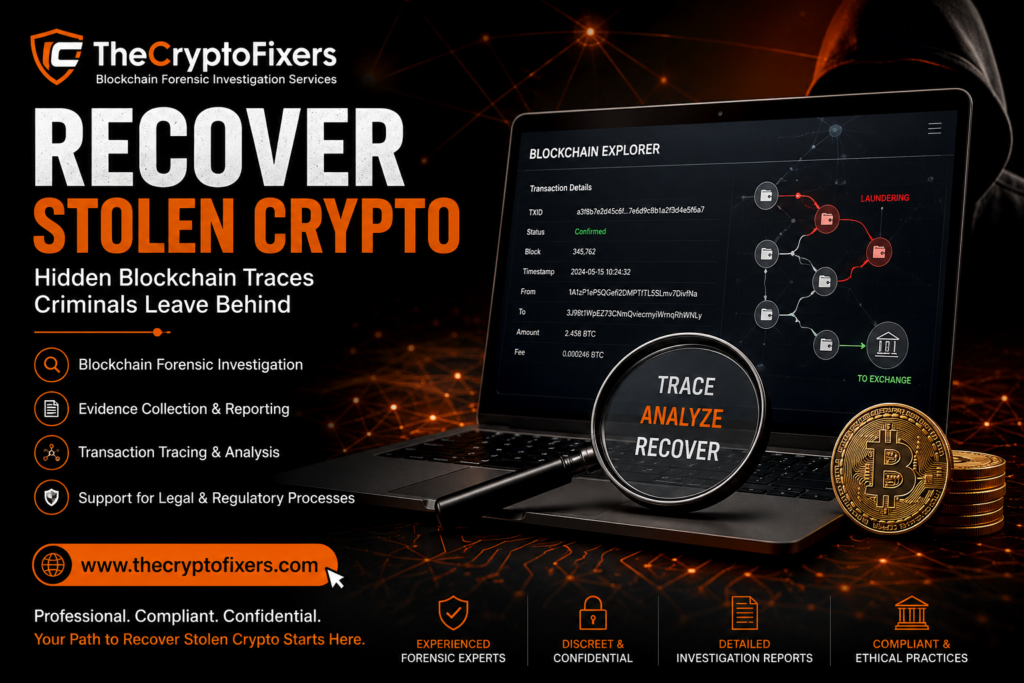
Hidden Blockchain Traces Criminals Often Leave Behind
Many fraudsters attempt to hide stolen cryptocurrency through multiple transfers. However, even sophisticated laundering techniques can leave patterns that investigators examine.
Examples include:
Wallet Clustering
Multiple wallet addresses may appear unrelated but can sometimes be associated through transaction behavior and blockchain analytics.
Transaction Timing
Repeated transfers occurring within narrow time windows may reveal operational patterns.
Exchange Deposits
When funds move to cryptocurrency exchanges, investigators may identify potential points where additional legal or regulatory processes could be relevant.
Smart Contract Activity
Decentralized finance (DeFi) interactions can reveal additional movement histories that help reconstruct the transaction path.
Token Swaps
Changing one cryptocurrency into another does not necessarily erase historical blockchain records.
Each of these traces contributes to a more complete understanding of how assets moved after a theft.
How TheCryptoFixers Approaches Crypto Investigations
TheCryptoFixers follows a structured blockchain forensic methodology designed to produce clear and well-documented investigative findings.
Our process typically includes:
Initial Case Review
Every investigation begins with understanding:
- the nature of the incident,
- the blockchain involved,
- available transaction records,
- supporting communications,
- and any relevant wallet information.
This helps define the scope of the investigation.
Blockchain Transaction Analysis
Investigators examine the blockchain history surrounding the reported theft.
This may include:
- tracing outgoing transactions,
- mapping wallet relationships,
- reviewing token movements,
- analyzing transaction sequences,
- identifying potential service providers involved.
Evidence Collection
Strong documentation is essential.
Investigative reports may include:
- transaction hashes,
- blockchain screenshots,
- wallet mapping,
- chronological timelines,
- technical observations,
- supporting blockchain records.
Well-organized documentation can assist victims when communicating with exchanges, legal professionals, or authorities.
Risk Assessment
Not every case has the same investigative outlook.
Factors that may influence the investigation include:
- blockchain network used,
- elapsed time since the incident,
- available evidence,
- complexity of fund movement,
- involvement of centralized exchanges,
- cross-chain activity.
Providing a realistic assessment helps clients understand the investigative process without creating false expectations.
Common Situations Where Victims Seek to Recover Stolen Crypto
Professional blockchain investigations may be useful in cases involving:
- investment fraud
- fake cryptocurrency exchanges
- phishing attacks
- wallet compromise
- impersonation scams
- romance scams
- social engineering
- NFT fraud
- decentralized finance exploits
- token theft
- business email compromise involving digital assets
Each case presents different technical challenges that require careful examination.
Why Accurate Documentation Matters
Victims often underestimate the importance of preserving evidence immediately after discovering a theft.
Helpful records may include:
- wallet addresses,
- transaction IDs,
- screenshots,
- emails,
- chat logs,
- investment platform information,
- account history,
- blockchain explorer links.
Accurate documentation supports a more effective forensic review and can reduce delays during an investigation.
Recover Stolen Crypto with a Structured Investigation
The phrase recover stolen crypto often leads victims to search for immediate solutions. However, legitimate blockchain forensic services focus on investigation rather than promises.
A structured investigation generally includes:
- reviewing available evidence,
- tracing blockchain transactions,
- documenting findings,
- identifying transaction patterns,
- preparing technical reports,
- supporting communication with relevant organizations where appropriate.
This investigative approach helps ensure that findings are organized, transparent, and suitable for further action.
What Makes a Qualified Blockchain Forensic Investigation Service?
Choosing the right investigative partner is important.
A qualified blockchain forensic investigation service should prioritize:
- transparency,
- technical expertise,
- realistic expectations,
- detailed documentation,
- compliance with applicable laws,
- clear communication,
- ethical investigative practices.
TheCryptoFixers aims to provide blockchain forensic analysis that supports clients with evidence-based reporting while respecting legal and regulatory requirements.
Frequently Asked Questions
Can stolen cryptocurrency always be recovered?
No. Cryptocurrency transactions are generally irreversible. Whether assets can ultimately be recovered depends on many factors, including how funds moved, whether identifiable services became involved, and applicable legal processes. A legitimate investigator should avoid guaranteeing recovery.
Why is blockchain investigation valuable?
Even when recovery is uncertain, blockchain investigations can document asset movement, preserve evidence, and support communications with exchanges, law enforcement, legal professionals, or regulators.
How quickly should I seek assistance?
Prompt action is helpful because preserving records and documenting blockchain activity early may improve the quality of the investigation.
What information should I prepare?
Useful information includes wallet addresses, transaction hashes, screenshots, communications with the suspected scammer, platform details, and any other relevant documentation.
Why Victims Choose TheCryptoFixers
Clients seeking to recover stolen crypto often want a professional, methodical approach grounded in evidence.
TheCryptoFixers provides:
- blockchain transaction tracing,
- forensic investigation support,
- digital asset movement analysis,
- comprehensive investigative reporting,
- technical documentation,
- evidence organization,
- professional case assessment.
Our focus is on helping clients understand what happened to their digital assets through careful blockchain analysis while providing documentation that may support appropriate next steps.
Conclusion
The decision to recover stolen crypto begins with understanding that blockchain transactions leave lasting digital records. Although no ethical investigation service can promise successful recovery in every situation, professional blockchain forensic analysis can play an important role in tracing digital assets, documenting evidence, and supporting lawful recovery efforts.
As a qualified blockchain forensic investigation service, TheCryptoFixers is committed to delivering transparent, evidence-based blockchain investigations. By combining transaction analysis, detailed reporting, and professional investigative practices, we help clients better understand the movement of stolen digital assets and prepare documentation that may assist with legal, regulatory, or exchange-related processes. If you have experienced cryptocurrency theft, acting promptly and preserving all available evidence can strengthen the foundation for a thorough forensic investigation.